
Manufacturing Equipment: Replace vs Repair Guide | HD Industries
Learn when to repair or replace manufacturing equipment. Discover cost, downtime, efficiency, and maintenance factors with HD Industries’ expert guide.
manufacturing equipment, manufacturing equipment repair, manufacturing equipment replacement, replace manufacturing equipment, repair manufacturing equipment, manufacturing machinery, industrial equipment, industrial machinery, equipment maintenance, machine maintenance, industrial maintenance, factory equipment, production equipment, equipment repair, equipment replacement, repair vs replace, replace vs repair, manufacturing equipment guide, industrial equipment repair, industrial equipment replacement, predictive maintenance, preventive maintenance, equipment lifecycle, machinery repair, machinery replacement, factory maintenance, plant maintenance, industrial operations, machine downtime, equipment downtime, maintenance costs, equipment efficiency, industrial productivity, manufacturing process, industrial engineering, heavy machinery, machine servicing, equipment inspection, asset management, maintenance planning, manufacturing solutions, industrial services, equipment reliability, production efficiency, manufacturing industry, repair costs, replacement costs, operational efficiency, manufacturing plant, HD Industries.
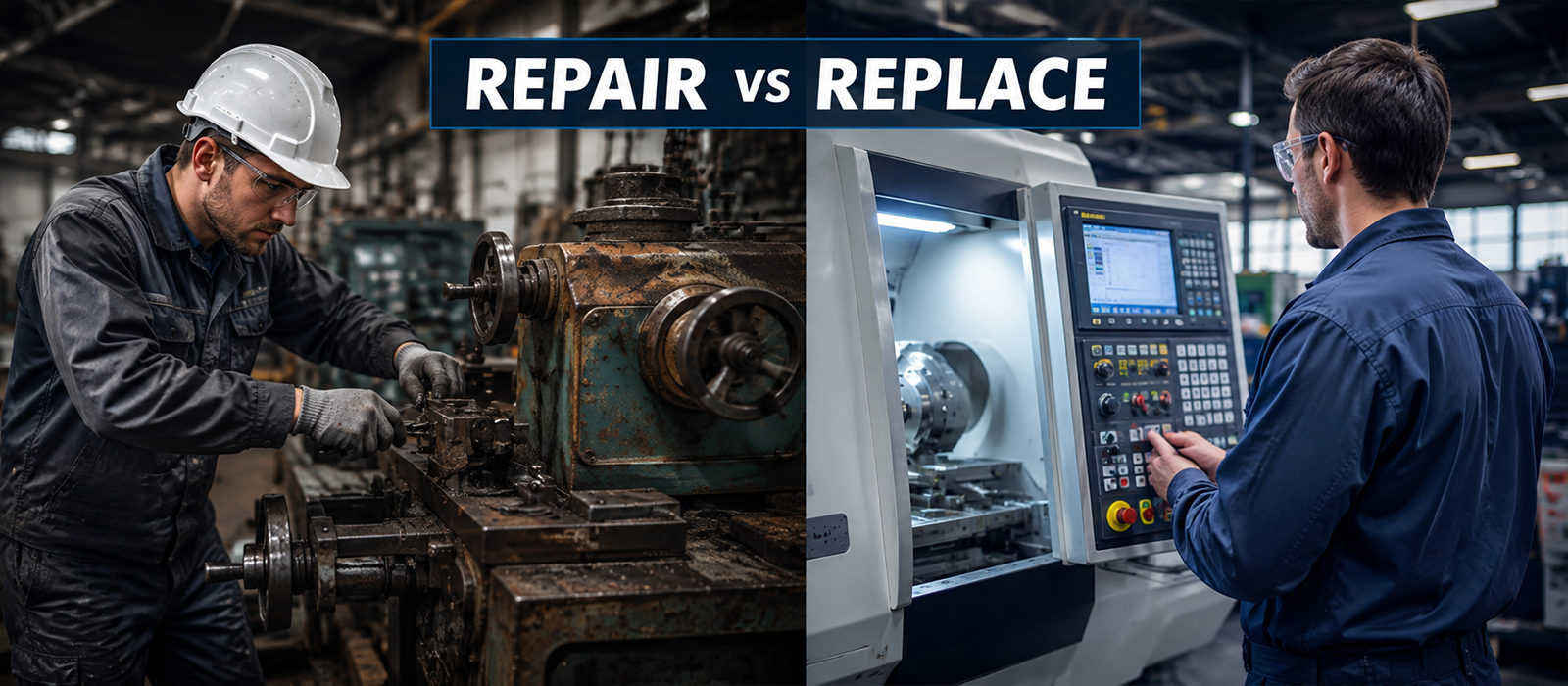
Manufacturing equipment is the heartbeat of industrial operations. When machines break down or underperform, businesses face a critical decision: repair the existing equipment or invest in a replacement. Making the right choice can save costs, improve efficiency, and ensure long‑term reliability.
The Case for Repair
Situations Where Repair Makes Sense
- Minor Issues: Small mechanical faults, worn parts, or calibration errors can be fixed
quickly. - Low Cost Repairs: If the repair cost is significantly lower than replacement, it’s worth
extending the machine’s life. - Newer Equipment: Machines that are relatively new or still under warranty should be
repaired rather than replaced.
Benefits of Repair
- Lower upfront costs
- Faster turnaround
- Extends the lifespan of existing assets
The Case for Replacement
Sometimes, repairing equipment is only a temporary fix. Replacement becomes the smarter long‑term investment.
Situations Where Replacement Is Better
- Frequent Breakdowns: If repairs are becoming routine, replacement prevents recurring
downtime. - Obsolete Technology: Older machines may lack efficiency, precision, or compatibility
with modern systems. - High Repair Costs: When repair costs approach or exceed 50% of replacement value,
replacement is more economical. - Safety Concerns: Outdated equipment can pose risks to workers and compliance
standards.
Benefits of Replacement
- Improved efficiency and productivity
- Access to modern technology and automation
- Reduced maintenance costs over time
- Enhanced safety and compliance
Balancing Cost and Productivity
How HD Industries Helps
At HD Industries, we guide clients through this critical decision. Our experts assess equipment performance, repair costs, and future requirements to recommend the most cost‑effective solution. Whether it’s precision repairs or sourcing advanced replacements, we ensure your operations run smoothly.
Conclusion
Knowing when to repair versus replace manufacturing equipment is essential for sustainable growth. Repairs are ideal for minor issues and newer machines, while replacements are better for outdated, costly, or unsafe equipment. With HD Industries as your partner, you can make confident decisions that protect your bottom line and future productivity.
Add a Comment