
Steel Fabrication Evolution | HD Industries
Explore the evolution of steel fabrication from manual craft to smart automation. HD Industries highlights tradition, technology, and sustainable innovation.
steel fabrication evolution, evolution of steel fabrication, HD Industries steel fabrication, manual steel fabrication, smart automation steel, steel fabrication automation, steel fabrication history, steel fabrication innovation, steel fabrication technology, steel fabrication manual craft, steel fabrication industrial revolution, steel fabrication mechanization, steel fabrication CNC, steel fabrication robotics, steel fabrication AI, steel fabrication IoT, steel fabrication sustainability, steel fabrication eco friendly, steel fabrication modern industry, steel fabrication advanced welding, steel fabrication laser cutting, steel fabrication precision engineering, steel fabrication industrial projects, steel fabrication construction, steel fabrication manufacturing, steel fabrication automotive, steel fabrication renewable energy, steel fabrication infrastructure, steel fabrication global standards, steel fabrication HD Industries, steel fabrication future, steel fabrication transformation, steel fabrication modernization, steel fabrication industrial growth, steel fabrication industrial strength, steel fabrication industrial solutions, steel fabrication industrial innovation, steel fabrication industrial excellence.
Introduction
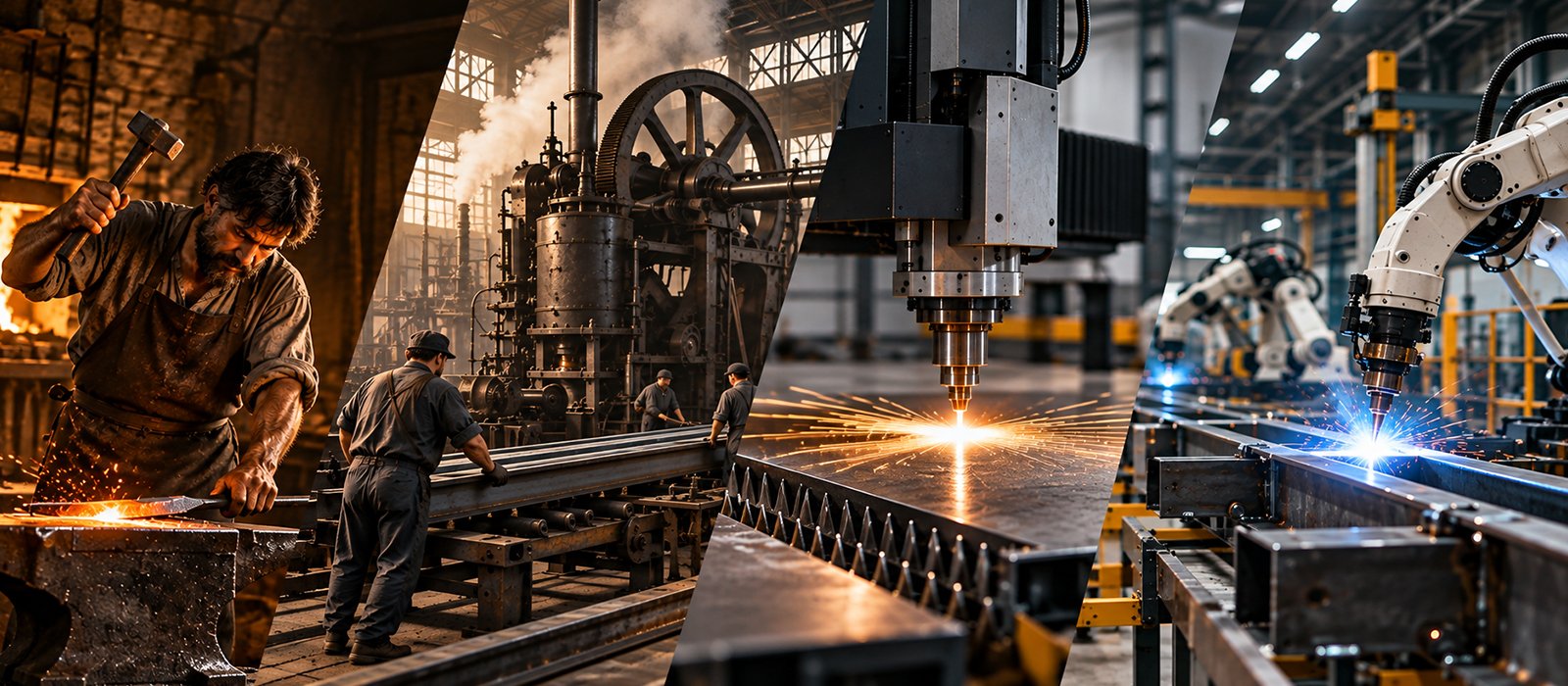
Steel fabrication has always been at the heart of industrial progress. From the earliest blacksmiths shaping steel by hand to today’s AI‑driven machines, the journey of steel fabrication reflects how industries evolve with technology. For HD Industries, this evolution is more than history it’s a roadmap to innovation, efficiency, and sustainability.
The Early Days: Manual Craftsmanship
In its earliest form, steel fabrication was a manual process. Skilled craftsmen relied on hammers, anvils, and basic tools to shape steel into usable forms.
Characteristics of Manual Fabrication
- Labor‑Intensive: Every piece required hours of physical effort.
- Artisanal Quality: Products carried the unique touch of the craftsman.
- Limited Scale: Production was slow, restricting industrial growth.
While manual fabrication laid the foundation, it could not meet the demands of expanding industries.
Industrial Revolution: The Rise of Mechanization
The 18th and 19th centuries brought the Industrial Revolution, transforming steel fabrication forever.
Key Innovations
- Steam Power: Enabled larger machines and faster production.
- Rolling Mills: Allowed steel to be shaped into sheets and beams efficiently.
- Welding Techniques: Introduced stronger, more versatile joints.
This era marked the shift from small‑scale craft to mass production, fueling growth in construction, railways, and manufacturing.
The Modern Era: Precision and Technology
By the mid‑20th century, steel fabrication had become more sophisticated.
Advancements
- CNC Machines: Computer‑controlled cutting and shaping improved accuracy.
- Laser Cutting: Allowed intricate designs and reduced waste.
- Advanced Welding: Enhanced strength and reliability of fabricated components.
These innovations made steel fabrication faster, more precise, and adaptable to complex industrial needs.
Smart Automation: The Future of Fabrication
Today, steel fabrication is entering a new era one defined by automation, robotics, and artificial intelligence.
Features of Smart
- Automation Robotics: Automated arms handle welding, cutting, and assembly with unmatched precision.
- AI Integration: Predictive analytics optimize workflows and reduce downtime.
- IoT Monitoring: Sensors track performance, ensuring quality and efficiency.
- Sustainability: Automated systems minimize energy use and material waste.
Benefits for Industry
- Speed: Projects are completed faster with fewer errors.
- Safety: Automation reduces human exposure to hazardous tasks.
- Cost Efficiency: Lower labor costs and reduced waste improve profitability.
HD Industries: Leading the Transformation
At HD Industries, we embrace the evolution of steel fabrication by combining tradition with technology.
Our Approach
- Skilled Workforce: Experienced professionals who understand both manual craft and modern automation.
- Advanced Facilities: Equipped with CNC machines, robotics, and AI‑driven systems.
- Sustainable Practices: Focused on reducing carbon footprint through smart fabrication methods.
- Client‑Centric Solutions: Tailored fabrication services that meet diverse industrial needs.
Conclusion
The evolution of steel fabrication from manual craft to smart automation shows how industries adapt to progress. What began as artisanal labor has transformed into a high‑tech process that drives global infrastructure, manufacturing, and innovation. At HD Industries, we continue to lead this journey, ensuring that steel fabrication remains efficient, sustainable, and future‑ready.
Add a Comment